A store of value: real estate as a haven in uncertain times
We are living through a moment in which the market seems to be shifting towards more stable, more tangible and more predictable assets.
After years of enthusiasm for high-risk financial assets, we are now seeing a deeper realignment: volatility does not only affect valuations; it also reshapes investor behaviour. Confidence is no longer placed in promises, but in consistency.
In this context, liquidity is beginning to move. And it is moving towards familiar territory.
Capital is leaving the intangible behind and returning to assets with a proven track record: gold, land and real estate. This is not a short-term trend, but a change in approach. In an increasingly abstract world, tangible assets are regaining their central role.
Real estate is taking up that role again.
But not through a simplistic view of it as a safe haven. It is a system capable of preserving value, generating income and navigating economic cycles with greater stability than other assets.
Within this framework, Uruguay holds a clear position in the region.
A market historically denominated in US dollars, stable rules and active housing demand create conditions that are difficult to replicate. In Montevideo in particular, certain types of homes —compact, well located and functional— continue to see sustained demand, reflecting new ways of living: greater mobility, less floor space and more efficiency.
However, in this new environment, the advantage no longer lies solely in investing in property.
It lies in choosing well.
Location, design, spatial efficiency, construction quality and the relationship with the surroundings become decisive factors. The market is becoming more selective, better informed and more demanding. And that redefines the developer's role.
Simply building is no longer enough.
Today, development means making informed decisions: understanding the city, anticipating behaviour and designing assets that preserve value over time. Moving from execution to curation.
This is where certain proposals begin to make a difference.
At Fika, we see development as a practice that goes beyond square metres. We consider each project in relation to its context, its actual use and its long-term prospects. Not only as a product, but as an active part of the city.
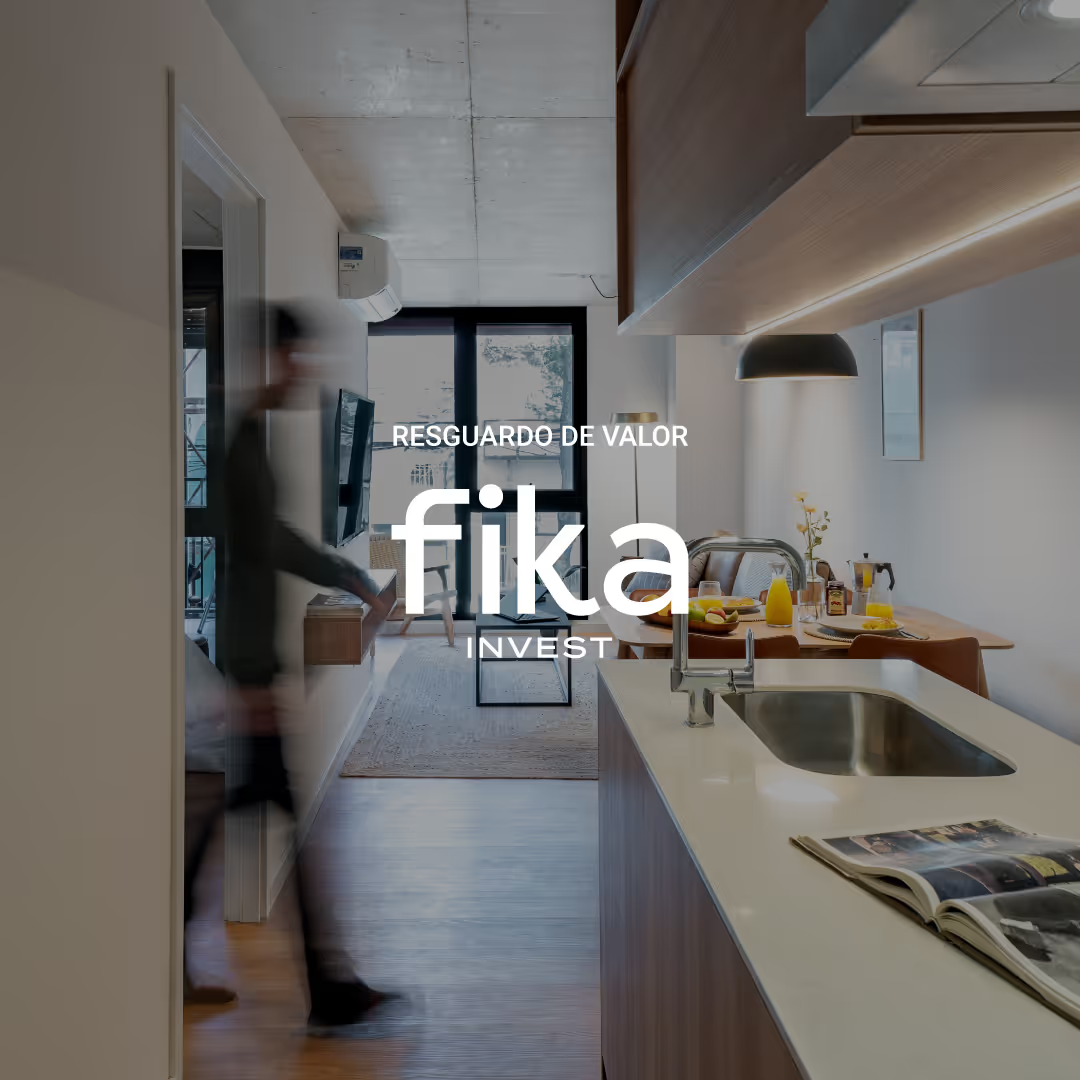
Projects such as Spazio IV, now part of everyday life in Pocitos, reflect this approach: developments that go beyond the sales phase and establish themselves as living assets within the urban fabric.
In a world where uncertainty has ceased to be the exception and become the norm, real estate retains its place.
But simply being in the sector is no longer enough.
The challenge lies in how we take part in it.